




Toofaiti (?)1 
F, #158041, d. 9 June 1831
Last Edited=16 Apr 2006
Toofaiti (?) was born at TahitiG.2 She died on 9 June 1831 at TahitiG.1
She was also known as Hutia (?)1 Toofaiti (?) also went by the nick-name of Nancy (?)1 She and Tararo (?) were associated at Pitcairn IslandG.1 She and John Williams were associated circa 1791 at Pitcairn IslandG.1 She and Edward Young were associated at Pitcairn IslandG.3
She was also known as Hutia (?)1 Toofaiti (?) also went by the nick-name of Nancy (?)1 She and Tararo (?) were associated at Pitcairn IslandG.1 She and John Williams were associated circa 1791 at Pitcairn IslandG.1 She and Edward Young were associated at Pitcairn IslandG.3
Children of Toofaiti (?) and Edward Young
- Polly Young+4 b. c 1794, d. 17 Dec 1843
- George Young+4 b. c 1797, d. 4 May 1831
- Robert Young4 b. c 1799, d. 18 Aug 1831
- William Young+4 b. 1799, d. 6 Feb 1839
Citations
- [S64] Glynn Christian, Fragile Paradise: The discovery of Fletcher Christian, Bounty mutineer, 2nd ed. (U.S.A.: Bounty Books, 2005), page 425. Hereinafter cited as Fragile Paradise.
- [S126] George Snell, online unknown url, George Snell (No longer available online), downloaded 29 August 2005.
- [S64] Glynn Christian, Fragile Paradise, page 424.
- [S74] Robert Nicolson, The Pitcairners (Auckland, New Zealand: Pasifika Press, 1997), page 221. Hereinafter cited as The Pitcairners.
John Buffett1
M, #158042, b. 16 July 1797, d. 5 May 1891
Last Edited=24 Dec 2005
John Buffett was born on 16 July 1797 at Hull, Bristol, EnglandG.1 He married Dorothy Young, daughter of Edward Young and Mauatua (?), on 10 February 1824 at Pitcairn IslandG.1 He died on 5 May 1891 at age 93 at Norfolk IslandG.1
He was a schoolteacher and carpenter.1
On 10 December 1823 On 10 December 1823 an English whaler, the Cyrus', visited Pitcairn. John Adams, beginning to feel the infirmities of his age, asked the Captain if there was anyone on board ship who would be willing to stay and help him with the arduous task of teaching the many young people. Captain Hall kindly passed his request to his crew. John Buffett, a young man of 26, stepped forward and volunteered his services. Being bound by no family or home ties, he counted it 'no great sacrifice to remain'. Buffett had, in early youth, been apprenticed to a cabinet maker in Bristol. Of a roving nature, the sea held a strong fascination for him, and he left his earlier profession to sign on aboard a small Newfoundland trader, served in the American merchant marine, went to London in 1821 to board the Penelope, and later the 'Impregnable'. He had been shipwrecked in the Gulf of St. Lawrence, and later cast away on the coast of California. There, he was treated very kindly by an old Spanish commandante, who made every effort to convince him to stay. But Buffett made his way to Honolulu, where he signed on the Cyrus. It was only on Pitcairn that the wanderer had a vision of a congenial occupation and a peaceful home.
He wrote many Pitcairn memoirs after the death of Adams (who had full editing rights of everything written while he was living), and is considered a reliable source.
From 1823-1828, when George Hunn Nobbs arrived, the young schoolteacher, with his practical, easy-going approach to living, took an increasingly powerful role in the leadership of the island. As Adams declined in health, he was also looked to as the de-facto religious leader.
The period from 1829-1832 seems to have witnessed a growing division between followers of the impudent and increasingly devout Nobbs and the practical, strongwilled Buffett. When Nobbs formed an 'alternate' school that attracted many of his pupils, Buffett quit teaching in disgust.
The arrival of Joshua Hill in 1832 marked the beginning of a very trying period in the lives of Buffett, Evans, and Nobbs. Realizing that these three would be the most threatening to his plans and beliefs, Hill singled them out for special humiliation and punishment.
Of the three, strong-willed Buffett was considered the most imminent threat. Hill, hearing of an incident that occurred 5 or 6 years before wherein Buffett had committed some wrong against the people of Pitcairn, obliged Buffett to undergo severe punishment, as he describes in his own words, 'After Mr. Hill's beating me over the head, breaking it in two places, and likewise my finger, I was suspended by my hands in the church, and flogged until I was not able to walk home. I was from this treatment confined to my bed for two weeks, and it was several weeks before I was able to work, or to use my hand.'
The ill-treatment that the three endured reached a climax when they were forced to leave the island in March of 1834, on board the Tuscan. They were carried to Tahiti, where Buffet became mate of a trading vessel. He was later reunited with his family, but they were not able to return to Pitcairn until after Hill's forced departure in 1837.
After Hill's departure, Buffett seems to have returned to teaching, and also to imparting his woodworking skills to his students, leaving the pastoral duties to Nobbs, and a cautious truce prevailed between the two. In fact, Buffett's introduction of woodworking to the curriculum brought several former pupils, disinterested in abstract education, who became very interested in learning more manual skills.
From early 1848, Buffett left the island on a voyage of 'commercial enterprise', perhaps to find a market for the higher and higher quality of carving and woodcraft produced by his students. He spent most of the period in Hawaii, and if he was successful, history does not relate. He returned on 10 Jul 1849 to much rejoicing.
In April of 1856, Buffett went to Norfolk with the rest of the population. He returned, however in July of 1872, he decided to return to Norfolk as a Minister to the people there 'who needed him'.
Buffett emerges from the records as a curiously appealing personality, a man whose desire for virtue exceeded his ability. Despite his faults, he was extremely popular with his fellow Pitcairners due to his lack of aggressiveness, his good nature, and his willingness to share with everyone the woodworking skills that were eventually to become the basis for Pitcairn's chief industry.1
He was a schoolteacher and carpenter.1
On 10 December 1823 On 10 December 1823 an English whaler, the Cyrus', visited Pitcairn. John Adams, beginning to feel the infirmities of his age, asked the Captain if there was anyone on board ship who would be willing to stay and help him with the arduous task of teaching the many young people. Captain Hall kindly passed his request to his crew. John Buffett, a young man of 26, stepped forward and volunteered his services. Being bound by no family or home ties, he counted it 'no great sacrifice to remain'. Buffett had, in early youth, been apprenticed to a cabinet maker in Bristol. Of a roving nature, the sea held a strong fascination for him, and he left his earlier profession to sign on aboard a small Newfoundland trader, served in the American merchant marine, went to London in 1821 to board the Penelope, and later the 'Impregnable'. He had been shipwrecked in the Gulf of St. Lawrence, and later cast away on the coast of California. There, he was treated very kindly by an old Spanish commandante, who made every effort to convince him to stay. But Buffett made his way to Honolulu, where he signed on the Cyrus. It was only on Pitcairn that the wanderer had a vision of a congenial occupation and a peaceful home.
He wrote many Pitcairn memoirs after the death of Adams (who had full editing rights of everything written while he was living), and is considered a reliable source.
From 1823-1828, when George Hunn Nobbs arrived, the young schoolteacher, with his practical, easy-going approach to living, took an increasingly powerful role in the leadership of the island. As Adams declined in health, he was also looked to as the de-facto religious leader.
The period from 1829-1832 seems to have witnessed a growing division between followers of the impudent and increasingly devout Nobbs and the practical, strongwilled Buffett. When Nobbs formed an 'alternate' school that attracted many of his pupils, Buffett quit teaching in disgust.
The arrival of Joshua Hill in 1832 marked the beginning of a very trying period in the lives of Buffett, Evans, and Nobbs. Realizing that these three would be the most threatening to his plans and beliefs, Hill singled them out for special humiliation and punishment.
Of the three, strong-willed Buffett was considered the most imminent threat. Hill, hearing of an incident that occurred 5 or 6 years before wherein Buffett had committed some wrong against the people of Pitcairn, obliged Buffett to undergo severe punishment, as he describes in his own words, 'After Mr. Hill's beating me over the head, breaking it in two places, and likewise my finger, I was suspended by my hands in the church, and flogged until I was not able to walk home. I was from this treatment confined to my bed for two weeks, and it was several weeks before I was able to work, or to use my hand.'
The ill-treatment that the three endured reached a climax when they were forced to leave the island in March of 1834, on board the Tuscan. They were carried to Tahiti, where Buffet became mate of a trading vessel. He was later reunited with his family, but they were not able to return to Pitcairn until after Hill's forced departure in 1837.
After Hill's departure, Buffett seems to have returned to teaching, and also to imparting his woodworking skills to his students, leaving the pastoral duties to Nobbs, and a cautious truce prevailed between the two. In fact, Buffett's introduction of woodworking to the curriculum brought several former pupils, disinterested in abstract education, who became very interested in learning more manual skills.
From early 1848, Buffett left the island on a voyage of 'commercial enterprise', perhaps to find a market for the higher and higher quality of carving and woodcraft produced by his students. He spent most of the period in Hawaii, and if he was successful, history does not relate. He returned on 10 Jul 1849 to much rejoicing.
In April of 1856, Buffett went to Norfolk with the rest of the population. He returned, however in July of 1872, he decided to return to Norfolk as a Minister to the people there 'who needed him'.
Buffett emerges from the records as a curiously appealing personality, a man whose desire for virtue exceeded his ability. Despite his faults, he was extremely popular with his fellow Pitcairners due to his lack of aggressiveness, his good nature, and his willingness to share with everyone the woodworking skills that were eventually to become the basis for Pitcairn's chief industry.1
Children of John Buffett and Dorothy Young
- Thomas Buffett+1 b. 3 Jan 1825, d. 18 Oct 1900
- David Buffett+1 b. 27 May 1826, d. 7 Aug 1924
- John Buffett+1 b. 21 Jul 1826, d. 23 Jun 1906
- Robert Pitcairn Buffett1 b. 26 Mar 1830, d. 2 Jan 1916
- Edward Buffett+1 b. 27 Nov 1835, d. 28 Nov 1911
Children of John Buffett and Mary Christian
- Mary Buffett Christian+1 b. 1 Oct 1828, d. 1901
- Benjamin Claudius Christian+1 b. 30 May 1832, d. 4 Aug 1897
- Ephraim Christian+1 b. 15 Feb 1845, d. 20 May 1920
Citations
- [S126] George Snell, online unknown url, George Snell (No longer available online), downloaded 29 August 2005.
Sydney Annie Florence Vyvyan Williams1
F, #158043
Last Edited=13 Nov 2005
Sydney Annie Florence Vyvyan Williams is the daughter of Charles Hussey Ansell Williams and Sophia Marion Vyvyan.1
Citations
- [S1521] Robert Foote, "re: Sydney Williams," e-mail message to Darryl Roger Lundy, 12 November 2005. Hereinafter cited as "re: Sydney Williams."
George Adams1
M, #158044, b. 6 June 1804, d. 29 October 1873
Last Edited=25 Nov 2011
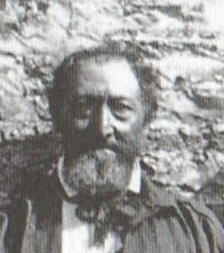
George Adams 2
He held the office of Chief Magistrate of Pitcairn Island in 1848.5 George was a strong opponent of Joshua Hill. In 1856, because one of his grandchildren was very ill and suffering convulsions, he opposed taking her on the migration to Norfolk, as it would kill her. His initial response was to simply refuse to go, but was forced to go by the island leadership.1
Children of George Adams and Polly Young
- John Adams+1 b. 10 Nov 1827, d. 29 May 1897
- Jonathan Adams+1 b. 23 Jan 1829, d. 23 May 1906
- Josiah Chester Adams+1 b. 19 Jun 1830, d. 2 Feb 1907
Citations
- [S126] George Snell, online unknown url, George Snell (No longer available online), downloaded 29 August 2005.
- [S3504] Fred Olsen, "re: Olsen Family," e-mail message to Darryl Roger Lundy, 15 January 2009 - 13 May 2011. Hereinafter cited as "re: Olsen Family."
- [S74] Robert Nicolson, The Pitcairners (Auckland, New Zealand: Pasifika Press, 1997), page 221. Hereinafter cited as The Pitcairners.
- [S74] Robert Nicolson, The Pitcairners, page 220.
- [S74] Robert Nicolson, The Pitcairners, page 244.
Florence Lowther1
F, #158045, b. 7 September 1559
Last Edited=17 Aug 2005
Florence Lowther was born on 7 September 1559 at Lowther Hall, Lowther, Westmorland, EnglandG.1 She is the daughter of Sir Richard Lowther and Frances Midleton.1
Citations
- [S125] Richard Glanville-Brown, online <e-mail address>, Richard Glanville-Brown (RR 2, Milton, Ontario, Canada), downloaded 17 August 2005.
Candice Ann Nobbs1
F, #158046, b. 3 February 1979
Last Edited=30 Aug 2011
Candice Ann Nobbs was born on 3 February 1979 at Norfolk IslandG.1 She is the daughter of Joseph Neville Nobbs and Glenda Anne Webb.2
Citations
- [S3504] Fred Olsen, "re: Olsen Family," e-mail message to Darryl Roger Lundy, 15 January 2009 - 13 May 2011. Hereinafter cited as "re: Olsen Family."
- [S126] George Snell, online unknown url, George Snell (No longer available online), downloaded 29 August 2005.
Maria Edith McCoy1
F, #158047, b. 26 August 1852, d. 28 September 1930
Last Edited=16 Apr 2006
Consanguinity Index=3.91%
Maria Edith McCoy was born on 26 August 1852 at Pitcairn IslandG.2 She was the daughter of Philip McCoy and Sarah Quintal.2 She married Byron Stanley Mitchell Adams, son of John Adams and Caroline Quintal, on 12 February 1871 at Norfolk IslandG.2 She died on 28 September 1930 at age 78 at Norfolk IslandG.2
Maria Edith McCoy usually went by her middle name of Edith.1 From 26 August 1871, her married name became Adams.2
She was the 100th descendant of Fletcher Christian to be born.2
Maria Edith McCoy usually went by her middle name of Edith.1 From 26 August 1871, her married name became Adams.2
She was the 100th descendant of Fletcher Christian to be born.2
Children of Maria Edith McCoy and Byron Stanley Mitchell Adams
- Celia Adams+2 b. 26 Aug 1871, d. 22 Jul 1923
- Audley Adams2 b. 6 Sep 1873, d. 16 Mar 1905
- Amy Arabella Adams+2 b. 20 Sep 1876, d. 31 May 1922
- Thomas Ephraim Adams2 b. 16 Jul 1878, d. 2 Sep 1935
- Augustine Adams2 b. 11 Dec 1881, d. 2 Feb 1944
- Viola Clark Adams2 b. 27 Nov 1888, d. 15 Aug 1904
- Annie Maria Salter Adams2 b. 3 Sep 1892, d. 8 Dec 1896
- Annie Maria Pearl Adams2 b. 7 Dec 1898, d. 12 Sep 1904
Joan Huddlestone1
F, #158048
Last Edited=17 Aug 2005
Joan Huddlestone is the daughter of John Huddlestone and Margaret Neville.1 She married Anthony Fleming.1
Child of Joan Huddlestone and Anthony Fleming
- William Fleming+1 b. b 1537, d. 1598
Citations
- [S125] Richard Glanville-Brown, online <e-mail address>, Richard Glanville-Brown (RR 2, Milton, Ontario, Canada), downloaded 17 August 2005.
Sophia Lawson1
F, #158049
Last Edited=20 Sep 2005
Child of Sophia Lawson and Harry Marshall
- Maxine Lawson Marshall+1 b. c 1900, d. 20 Aug 1945
Citations
- [S126] George Snell, online unknown url, George Snell (No longer available online), downloaded 29 August 2005.
Clara Flora Nobbs1 
F, #158050, b. 15 August 1877
Last Edited=20 Sep 2005
Consanguinity Index=3.91%
Clara Flora Nobbs was born on 15 August 1877 at Norfolk IslandG.1 She was the daughter of Alfred Augustine Nobbs and Mary Emily Christian.1 She married Charles Medley Evans, son of William Evans and Rebecca Christian, on 17 December 1896 at Norfolk IslandG.1 She died, without issue.1
From 17 December 1896, her married name became Evans.1
From 17 December 1896, her married name became Evans.1
Citations
- [S126] George Snell, online unknown url, George Snell (No longer available online), downloaded 29 August 2005.
